Featured Memorials
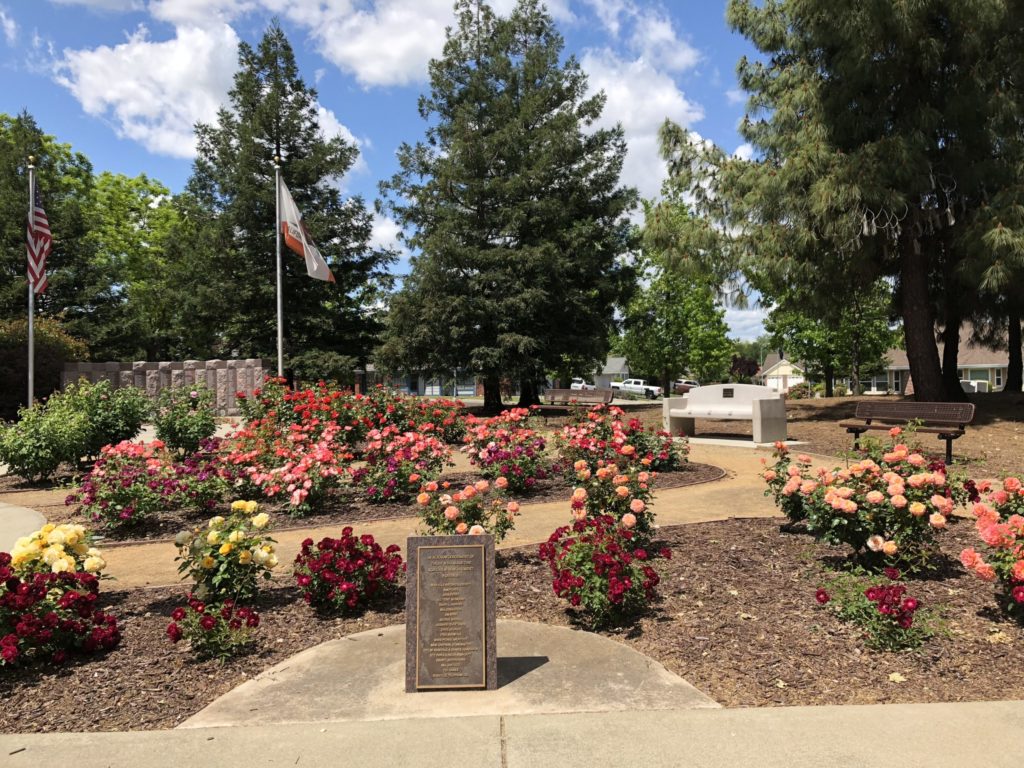
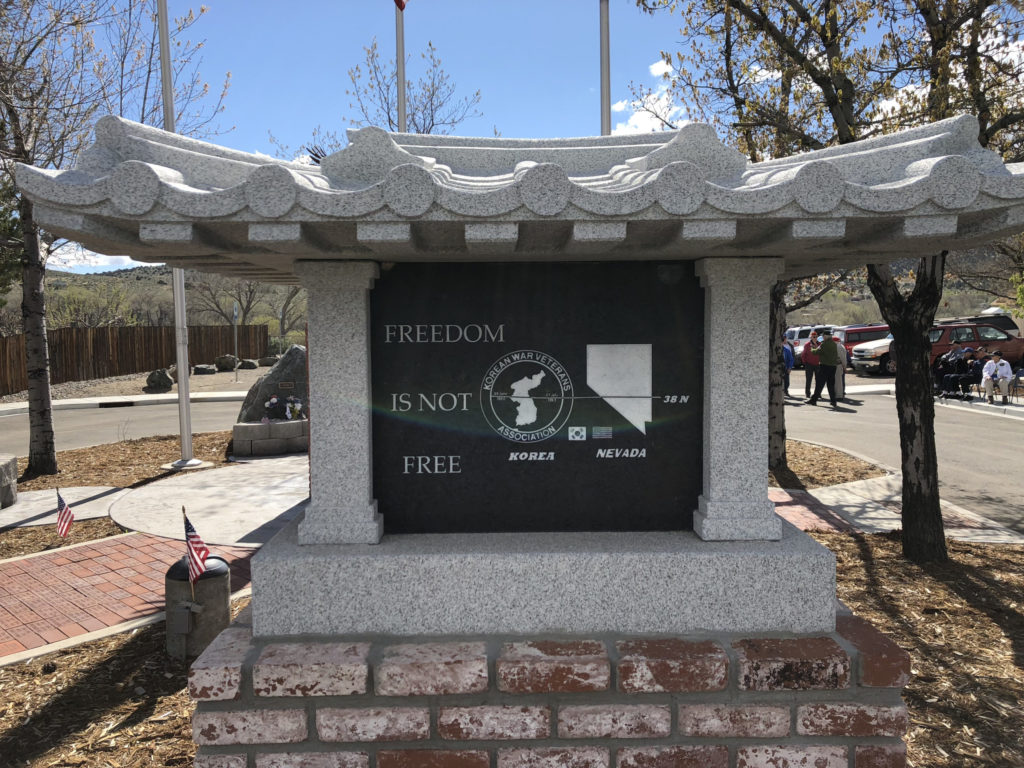
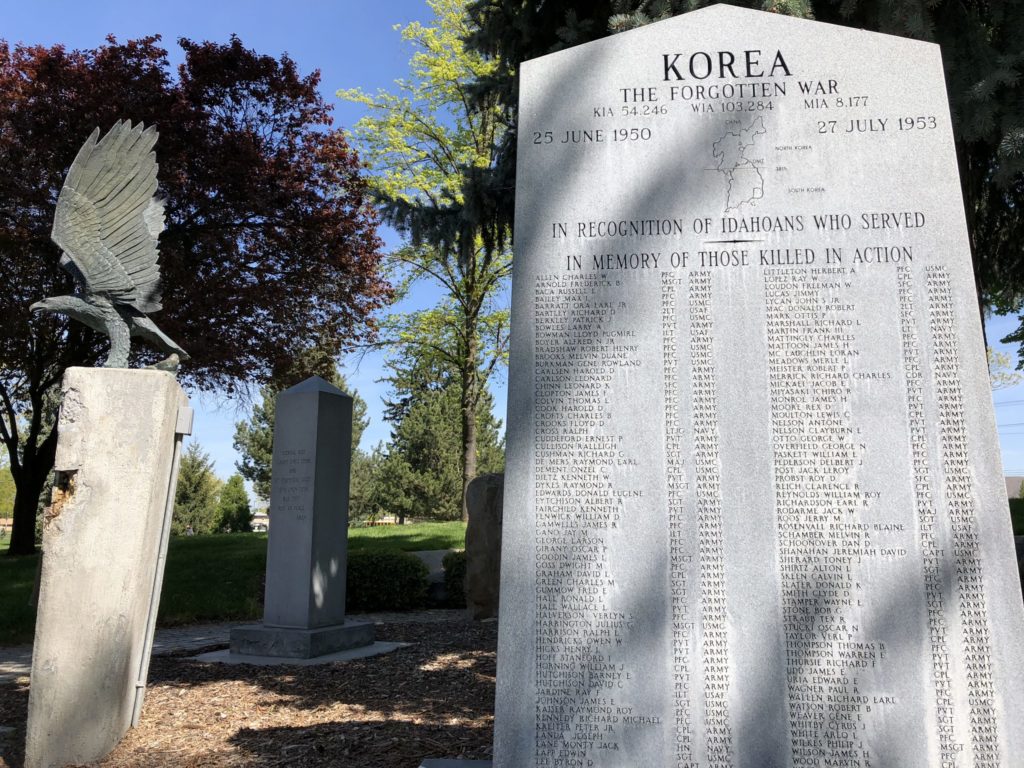
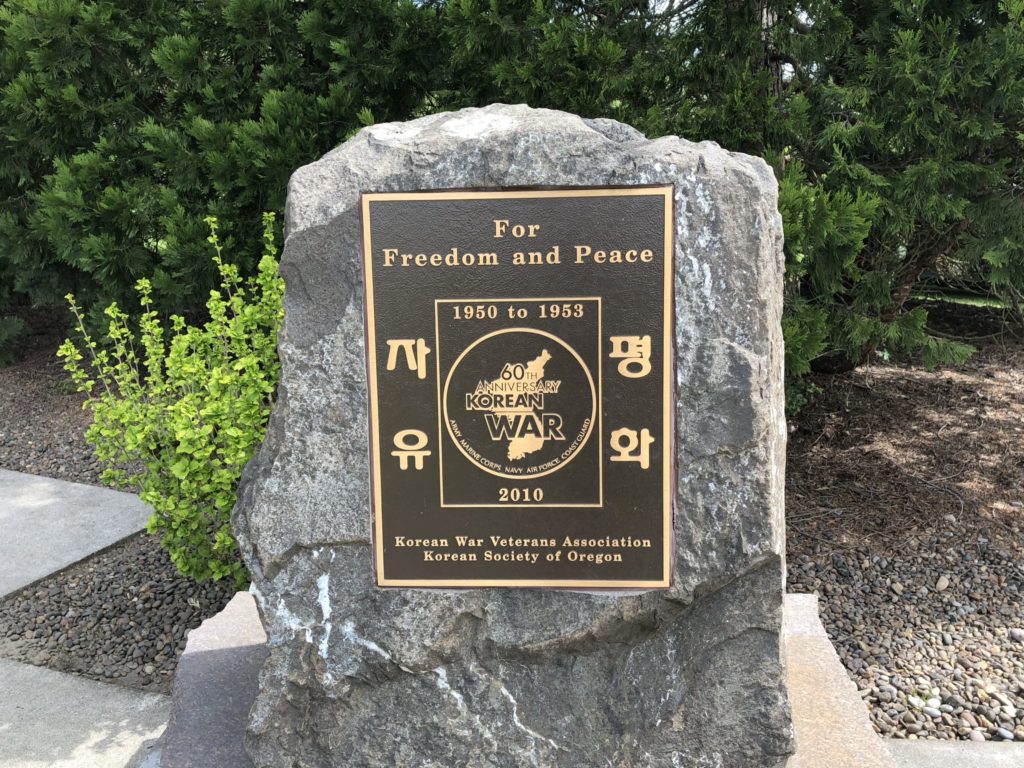
Featured Stories
>> My name is Joseph Wagner. I was during [INAUDIBLE] tough years in the Luxembourg Army, and one part of this occupation from back in the Korean War. I engaged in 1950, and I was sent to Korea with the Luxembourg detachment. All the people, they were volunteers. They had all volunteered, and we were attached to a Belgian battalion. We couldn’t afford to have a big force, to have all the logistical facilities, unit command, but we were all the time with Belgians attached to a Belgian company. And so we went, before the war, sent to a Belgian training camp. We did all the training which was useful for fight, for a soldier to be engaged in a war, and after that, we were sent to Korea on a Belgian boat. It was called the Kamina. We went on a Belgian boat, the Kamina, which was not very comfortable. We had very hard time during 6 weeks, being from one sea to the other, and we arrived. We started on the 13th of December, and we arrived in Korea on the 31st of January. It was a long way, yeah? So then we were received in a reception center. We went on training again, what we found out by contact foreign units who had already fought in the Korean War because we came in. Then the Chinese were already in the war. They started in November, and we arrived on the 31st January, and what I feel, we never saw a North Korean soldier. We were all the time engaged with Chinese because during the landing in Incheon, all the Korean units, they were cut off from their bases, and they had no contact from their bases anymore. And, well, our first mission was to fight them, and we had our first mission, was to control the communications of South Korea, and we were stationed in week one. Week one, that was our first mission. We were all the time patrolling the region to be sure that those people would not go making trouble in this area. And after that, we joined the third American division, and we were taken in offensive action that was south of Seoul. As I said, we had to … First crossing was the Han River, and then we went up with American units, with the third division, up to the 38th parallel. And from there, we trenched, our attachment. Then we were attached, the Belgian battalion was attached to the 29th British brigade, commanded by General Brodie. General Brodie, he was a jungle fighter, and when they sent him to Korea, there were only mountains and stones, no jungle at all. And, well, we were attached to this unit, to the 29th brigade, and then came the backlogged [INAUDIBLE] on the 23rd of April, and I was sent out on a patrol from the 12th to the 13th of April, and the Chinese, they were nowhere. Nobody knew where they were, because we had so many patrols during the night. Every unit had to send out patrols, and when I was sent out, I had … My mission was to see if a certain position was occupied, and when I came to this position, the position was occupied. We have a firefight with the Chinese occupation, and then we pulled out. We pulled out. We had one wounded, not by a bullet, but he was … He fell down on a certain position where he hit barbed wire or some kind of defense object. So we came back to our base, and I was called to the brigade’s operation officer, to the [INAUDIBLE] of the brigade, and then I told my story, that we were having contact with this position where we were both sent, and, well, that was very valuable information because 10 days after that, the war started. They started. The Luxembourg detachment was … North of the Imjin River was the other unit, the Luxembourg company, the Luxembourg … The Belgian battalion was north of the Imjin River, and all the other units from the brigade, the [INAUDIBLE], the oilers, the rifles, the [INAUDIBLE], they were south of Imjin River. And then when they attack, well, we had to, first of all, to hurt the position, 23 hours before we could move back, and we were already surrounded by the Chinese, and we were liberated, the help by air strike and by tank patrols. They cut the way from the Chinese, and so we had the chance to pull out, and then we went back. We went back, and during our retreat, we had, from time to time, what I call retreating operations. You had to occupy a position. You had to pull out. You had to occupy another position to make the aggressor that came from time to time on the resistance. And then we kind of came back to, well, south of Seoul. I don’t know the town anymore, and then we were on reserve of the brigade because the brigade was not operative anymore because they had already lost so many. They had lost one battalion. They lost the battalion, was wiped out on their position on the Imjin, and so the brigade was what we call in reserve. And after that, we were patrolling, all the time, the Imjin River, and that is where we had two wounded, two wounded on the night patrol, and we … Because the Chinese had all the time infiltrators across the Imjin River, and they were patrolling the whole region every night, every night. So we had two wounded, and they were evacuated to Japan, and when they had been, the treatment was up, they came back to our position. They came back to our position again. And, well, from there, we came also on a very comfortable situation because we were also reserve of the brigade. And from there, we stayed on the position making patrols on the level of the battalion, what they called a sweep, a coup de ballet, a sweep, to find out where the Chinese were because the Chinese, after our offensive action, they had been thrown out. They had been thrown out. And then of the first of July, we had very big operation, the Luxembourgers with Belgian battalion, Belgian company, and that was, we had to occupy the bridge head across the Imjin River. The bridge head, we had to make our position and when we moved up, we crossed by boat. The Imjin River was very swollen. It was very high, and we crossed by boat, and the British engineer troops, they took us along. And when we came on the other side, there were some people left on the village. They said, “Well, they are 800 men who have just left the position we occupied,” where we should occupy our bridge head. And after that, after we were occupied, we were attacked by enemy fire, by Chinese fire. They were occupied about 800 to 1000 meters in front of us, and we were taken in by fire. They attacked us by fire, and, well, as I was on the side, I had all the time, the possibility, the facility to call for artillery fire, and I knew exactly where they were, and I called artillery fire on their positions, but they were very clever soldiers. They were very, very successful and very skillful. And then a Belgian company was moved up to find out where the Chinese were located, and when they came up to the position, they were attacked by the Chinese, and they had to pull out. And we were on the favorable position to have to help them by protective fire, and all our men, all our, well, platoons started to give supporting fire to the Belgian company, and the company commander, he used to say all the time, “If I would not have had Luxembourg platoon on the 1st of July, my company was wiped out,” and that was a very good compliment to me and to my people. So we had to pull out again. We were the last one section after the other, and I was with the last section, and I was in the last boat being taken over in the Imjin River on the other side. And then the whole battalion, and some supporting elements of the brigade, they all were shooting to protect our reply. So when we were on the other side, well, we were safe again. We were safe because the Chinese, they were not … They had no means to follow, they had no means to go further than what they have done already because the Belgians, they had three or four wounded and so many hurt, so many hit and so many wounded. And then we went up to our position again from where we were located, and then on the … When did we came back? On the beginning of September, we were relieved from our position, and because the idea was to take the first battalion, we were sent in Korea, the Belgian battalion, to be sent home again, and we arrived in Rotterdam on the 2nd of October, 1951, and then we were sent back home again. But there was one more very important incident. Before we were liberated from the position, we had to take part in an offensive action that was what we call a diverging, and we were attacking., We were attacking a certain position, on a certain position, the Chinese. But on another sector, in the middle sector of the whole line, there was a very big attack moving on, pushing the Chinese further to the north. And during the night of … I forget. It was in August, the 7th or the 9th August, we were attacked again during the night by the Chinese, and we were … They were so close to our position that I was afraid that we would not have enough ammunition to fight them for a certain time, but that didn’t happen. The Chinese, they moved back again. We drew them back, and then we came back [INAUDIBLE] Imjin River and then we were called to what we call, to a position where we can have a rest, a resting position, and then we moved up. We handed up all our equipment, and then we were taken to Incheon on the boat, the General McRae, and, I guess, that must be in September. Yes, because we were 1 month on the way up to Rotterdam, and that was the end of the first detachment. We were sent back to Luxembourg, and then the people, they were sent on leave, and I went home to my parents, and that was as far as I had done as a Luxembourg commander and as a Luxembourg soldier during this war.
>> So how many Luxembourgers fought in the war?
>> How many Luxembourgers in the Korean war? At the whole, we were the second detachment that was created, and that was … We had 85 people in the Korean War. Eighty-five Luxembourgers were served in the war, and we have two wounded, and about 52 … No, 32 killed, and about 15 to 14 wounded. That was, for me, as a young soldier, a young officer, was a good experience. A good experience not only to fight another aggressor, but it was also very good experience how to handle people, how to handle people in a critical situations because I had to have confidence in my people, and they had to have confidence in me. I was a leader, and we have never had an incident or trouble that somebody was … I was very glad, and very glad. I had confidence in my people, and that was also a very big satisfaction for me when I came back. I had my people. Some had re-engaged. Six people had re-engaged, but where the other people, they went back to Luxembourg with me on the second of October.
>> You came back, and you volunteered. You said the 85 volunteered.
>> Yeah.
>> Including you, why do you think they volunteered?
>> All the other? Well, some people, they didn’t have a job. Other, they had maybe an adventurous spirit in mind because the adventure was all the time in the air, you can say, because people, well, they are excited, but most of those people, I feel they wanted to be soldier, and I don’t know exactly what were their feelings. If they were in to fight an aggressor and to help the Korean nation, I don’t know. My feeling was that I was engaged to help the Korean nation because they were in a very critical situation, and I was just coming back from school, so I said to myself, “Well, this is a very good occasion, first of all, to find out what is going on as a leader in a war.” And my second motivation was to help the Korean people because what we had heard, that the Korean people, the poor farmers, that they had been attacked by a very well-equipped aggressor. Yes, that was … When I started, I was at school. I didn’t know anything about Korea. I didn’t know where this country was, and I didn’t know what was going on, and finally, we found out that there was a separation between South and North which was because the first President, Syngman Rhee, he made elections in ’48, and when the people of the North, they had no rights because they were already under the domination, under the rule of Nam Il-Sung. Nam Il-Sung was the first president.
>> Premier Sung.
>> They did not take part in this elections, and Syngman Rhee had already in mind that he would be the president of the whole Korea. And, well, it came in another way, and, well, they were really surprised, but the American, I mean, information of this at G2, in this area, they should have known that something is coming up because if you start an aggression, you have to assemble so many units and I don’t know. Well, they had no chance. There were not many American units to block them, and so that was the reason why they had a chance to go so far to presume. They … Well, it was not far away that they had thrown the whole United States … not the United States, the United Nation Army in the sea again. And that was … That would have been a very big operation to have ground again in South Korea, and fortunately, in this few place on the Naktong, fortunately they stopped. They blocked the Chinese offensive, Chinese they were, and that was very … the biggest luck which could happen, and then after the Imjin, the Imjin landing, the Imjin landing by MacArthur where he cut out all the bases, all the units who were cut out, and then they broke out. General Walker, he was commander of the 8th Army. He broke out and then to join the forces who had made the landing, the landing that was at the height of Seoul, because from Imjin, they went in direction of Seoul, and Walker, he broke out in the same way because he had not very much resistance because all the North Korea, they were blocked. They were all cut out, cut up. And so they came together, and then from there on, from this part on, it was the United Nation forces. They were, we say, so many nations had engaged themselves, and at the end, we had 21 foreign nations fighting the Chinese in the Korean War, and that was the lucky part, what I have found, and it was very done well. Came the part when MacArthur was relieved from Ridgway …
>> Truman.
>> Huh?
>> President Truman.
>> No. No, MacArthur, he was liberated from his post or sent out or sent back by Truman, and he was replaced by Ridgway, and from there, from that point on, Ridgway was our operative commander, and he was a very good man. He made many punishment operations, what he called, when the Chinese, when we had attacked or found out some posts that they had taken back so many soldiers of the United Nations. Then he made a punitive operation. He said, “Now we will punish them,” and then he attacked on certain points. Well, I could not say much more about …
>> You must be very proud of …
>> I was.
>> … the Luxembourgers’ contributions.
>> Yes, I was. I was really proud, and I was also, not only to myself that I succeeded in my, in the whole field. I was very proud to have done a very human mission, and I was very glad that when the South Korean War was over, and the people could recover, and I was very much surprised what they have done during the last 60 years. I was so much surprised every time when I was in Korea. I was there already eight times, six or eight times, and I was all the time surprised for also about the kindness of your people. They are so kind and so grateful, very. That’s what is also, when I come back, all the time, they say, “Oh, if you would not be our liberators, if you would not come to Korea, what would happen to us?” And so that was what … And in the museums, Luxembourg is very well represented. In the museums in Korea, Luxembourg is very well represented. And then when after that when we followed, when we are back, we followed that very closely, and we were glad to hear that they have had finally come to agreement to cease fire. Not to … at peace because they are still in war. North Korea and South Korea, they are still in war, and I wonder about the motivation of the South Korean units. They are very good soldiers. They are very, very … Oh, I can’t imagine that the North Koreans, they would not come along far if they were there to attack, but there is one thing. I was in one of those tunnels. They had created eight tunnels under the Imjin battle, under the Imjin River. I was in one of those tunnels, and when they would have attacked again, they were not ready, but they could have attacked it with so many divisions across one tunnel. Well, that would be, what we call the most biggest evil which could have happened to the South Koreans because they found only out that there were tunnels. There were tunnels inside. They could not … They found out that the soldier, he was so vigilant, and he said he heard some noise, and went, “What is that?” And then they looked, after that, in making research through the earth, and then they found a [FOREIGN LANGUAGE], we called it. How do you call that?
>> An empty [INAUDIBLE].
>> An empty hole. And they investigated, and they started to look after that, and then they found the tunnels. That was also very lucky. Oh, because that was … No, they had no good things in mind, and luckily, I was very, very happy that Korea had developed in this manner. Good army, very well organized in the industrial field. Oh, I was very lucky to hear that Korea had recovered.
>> Well, like you said, we are all very grateful to you and your fellow Luxembourgers for your service.
>> Thank you.
>> Thank you.
>> My name is Alfred Ignacio. I was born in February, 21st, 1934. I joined the military in November 1951. We left for basic training in Hawaii Schofield on November 29th. We arrived in Hawaii on December 8th. Survived basic training for 16 weeks, infantry basic training. After basic training, they have list of people for different assignment. Some assigned to US, some for Korea during the war. My name fall under the Korea assignment. We were supposed to go straight from Hawaii to Korea, and we kind of declined and asked if we can go home first and see our family before we go to war, so they let us. They give us, I think, like 8 delaying … 8 days delaying route to stay with our family and wife. Then we boarded a ship that was going to Japan, and from Japan, they ship us to Korea. We came in the late afternoon the Korean Peninsula. We cannot disembark because it was too daylight, and so we wait until nighttime when it’s dark, and then we disembark, and while we disembark replacing them. Also we met on the way that were going out to replace us. We are the replacement for them. From there, they took us to in the train, and we went to classes in Yeongdeungpo. Some other men before we get to assigned to our unit, I was a … Then later I was assigned to the 45th Infantry Division. They were pulled off the line resting when I arrived to this unit, and I met them there. From there, we wait for maybe a week or two before we move up to the front line with this new unit that I was assigned to, and from there, we have assignment on this section of main line of resistance. They call it MLR. Our mission actually is mostly defensive instead of offensive. We do offensive, but not as much as defensive. We have to secure combat outposts, and that’s where most of the fighting are because this is very important section of the line that everybody wants to take, the enemy and us, so if they are the one occupying, we try to take it from them, and if we overrun them, they lose. We took it, but then they’ll try to take it back again, so that’s how we fight. A lot of the people at this outpost were American people who take the wounded and dead, but the enemy, they just left the dead, so the place is very nasty. It’s dirty, stink, dead people all over the place, especially in the summer. It’s … You can’t hardly stand the smell. It’s terrible. In the winter, it’s not too bad because they don’t decompose like the summer. That’s how we … Like I said, mostly we do defensive, not offensive. We don’t go out and attack them or like that. We just try to maintain what we have and guard it and not for them to take it back, and that’s how the mostly the people that do that. Then we have to move to get some more, and that’s when we would be offensive. I stayed there. I have to make 36 points to go home. If you up on the front line, you get four points a month. If you move back to a blocking position, which is a little bit behind the line, you get three points a month, and then a little bit further back, maybe relaxation area, you get two points, and if you go back to the gate, the Army Reserve area, you get one point a month, so the more you stay out on the line, faster you can get the points to go home. It took me about almost a year to make that 36 points because sometimes we go back, rest, come back on again until the time comes that I make my points. Then I go home.
>> Tell me about the Inchon Landing, the Second Inchon Landing.
>> It’s not really a landing. It’s … That’s where we disembark from the pack. I think that’s where the ship comes in to disembark people. I don’t know about that first Inchon Landing. Okay. I think there’s a story about that. I didn’t even know about that.
>> But how about your experience from Inchon?
>> The tour when we went to Korea, the agent make arrangement for the Korean veterans to visit Korea. That’s when the tour people told us that this is the Inchon Landing, and I didn’t know what took place on that first time, and … Because I was in maybe third group. The first one, I think it’s the Inchon Landing where they to have to fight their way in, or I don’t know. When we came near, we were not being …
>> And you said you lied to your mother about …
>> Yeah. Well, when I joined the military, I was 17 years old, and they won’t take me because you still have to be 18, and I really want to go. I was supposed to go to high school. I just graduate from the eighth grade in San Francisco, and I’m supposed to go to GW to high school, but instead of going to the high school, we all went to the recruiting office, and we sign in to join the military. Actually, I was going to go join the Air Force, but they said it’s full already. They don’t take anymore, so the Army is open, so we don’t have any choice. We took the Army, and we have to take the test. Eventually, I passed it. They took me in, and I got lot of problems in my physical, and I get rejected for being in the military. I got a big red mark on my paper that said rejected, and I said, “Oh, my god. I want to go,” so somebody told me that there’s a way to fix my rejection. My tooth hurt bad, so I have to have it fixed, high blood pressure. That’s the one that they find on my physical, high blood pressure, and I have to … I went to the dentist and have it pulled out, the bad one, I think two or three. I have to pay for that, and then they said you drink … Maybe have a glass of vinegar for your high blood pressure, so I did. I drank the vinegar, and then I asked the doctor to take my blood pressure, and he says there’s nothing wrong. It’s all normal, so I took my paper to the recruiting office, and I turn it in. My tooth, I fix, and my blood pressure is normal, so they took me. That’s how I joined the military. My mother have to sign a paper. I lied to her. I said, “You have to sign this because I raised my hand already, and if you don’t sign it, I go to jail,” so she signed the paper. That’s how I get in the military, and I got the basic training. Oh, how a mess that I made.
>> How about now?
>> After that, no problem. I was happy. I enjoyed being in the military.
>> And you must be proud of your service.
>> Yeah, yeah, yeah.
>> I’m glad for what I did …
>> And I’m …
>> … and what I earned.
>> And I’m very grateful for what you did.
>> Yeah.
>> Thank you so much.
>> Yeah.
>> Thank you.
>> Okay.
[ININTELIGIBLE]
– My name is Javier Angel Morales. I am the past president of the 65th Infantry Veterans Association. I served for about 5 years. Our organization [inaudible]. And they were the ones who organized this whole association in 1936. At one time we had numbers of about 500 members. Now they only have about 150. They had to open up the association to allow veterans from other conflicts or wars to become members, because we want to continue the legacy that the 65th infantry gave to Puerto Rico. As to the Borinqueneers, there was a voluntary army, first [—] in 1917. They were all voluntary. They didn’t have to be drafted. The draft came in World War II. After World War II then came Korea. During the Korean War there were a lot of draftees. I could relate to some of the stories given to me by the different veterans, who were in smaller towns, but when they heard that there was a truck coming picking up those that would like to join the service, they jumped on the truck and were taken to [—-]. Some of them… one person told me that it was the fourth time he was trying to get in the truck, but they turned him down because his age was not the legal age to be drafted. [inaudible]. The regiment was composed of veterans that were from World War I and II. They had been volunteers and they were ready to retire, but they were asked to stay so they could train the new recruits, so most of them did that. That’s why I think the regiment was so…
– Experienced?
– So experienced during the first years of the war, that they were labeled [—-].
– How many served and how many suffered [—-]?
– The count that I have from Puerto Rico was about 63,000. Out of those 63,000, there were 2,700 that were wounded in action. There were about 740 that were killed in action, and out of those 740, there were 122 that were missing. Currently I think there’s about 110 or 112 that are still missing in action. And as they find their bodies or they’re able to identify them, they are added to the Wall of Remembrance in San Juan.
– So, if there’s… I know the 65th earned the congressional gold medal.
– Yes.
– Of course I’m partial, I know they deserved it, but not everybody knows. So, why?
– Okay. The regiment was very successful. They had a maneuver in Vieques called Portrex. They went against the best unit from the United States [——], and they were able to repel that invasion. So that stayed in the mind of Colonel Harris, and when Colonel Harris was in Korea, they asked him that they needed an infantry unit to be able to go to Korea because they were running short. So he said, “Well, I had a regiment I’d like to bring here.” and he mentioned the 65th infantry regiment. But they were… the high brass was very reluctant, because one of the things they said is, “But they never fought during World War I.” Only one battalion fought, which was the 3rd battalion. There were two casualties. And during World War II, they were mainly to secure… or security, of the different bases, of the different places in the Caribbean and in Europe. During the Korean War they were an infantry regiment, and they were well prepared because, like I mentioned before, a lot of them were veterans from World War II. They had experience, they had training necessary to be in battle. And so, that training went on to the new recruits that came in. When they got to Korea, they were instrumental in helping the 1st [—] division exit from the surrounding by the Chinese. Although the Chinese were pushing us back into the sea, the 65th regiment was the last unit to disembark, or to get on the boats, because they were the last ones that were safeguarding the back of all the other soldiers.
– Two last very simple questions. One is, you’re not even a Korean War veteran, why do you care about them so much? Okay? So that’s one. Two, tell the Korean people why they shouldn’t forget.
– When I was in the service, I was serving in Germany, and one of my fellow compatriots mentioned the 65th infantry. I never knew anything about the 65th. I wasn’t interested because I just wanted to serve my two years and leave. When I retired at 60, there was another instance, where I was in Connecticut and I overheard somebody say, “The 65th? They didn’t do anything right.” And that kind of stayed on my mind. I said, “I have to find out about that.” So, when I retired at 60, I said, “I need to go to Puerto Rico, because I want to see Puerto Rico.” [——–], and I did that. But before that, I told my wife and she started crying, and I said, “What’s the problem?” She says, “Well, you’re going to get old on me, and you’re going to die.” And I said… that scared me, and I said, “No, no, no. I have to do something.” So I came to Puerto Rico. Six months I went around the island. This time my brother was calling me. He says, “Look, I need you to help me.” And I said, “Help you what?” He said, “I need you to help me find veterans that were wounded, because I want to start an organization in Puerto Rico called The Purple Heart Organization, to be able to recruit and have a chapter, a register in the national Purple Heart Hall of Honor.” And I said, “Well, I’ll see what I can do.” Meantime, the president of the 65th infantry association was after me telling me the same thing, “Look, I need your help. You’re the youngest, and I need to make sure people don’t forget this organization.”
– So, to the Korean people, why should they not forget the Borinqueneers?
– To the Korean people, first of all I want to thank them very much, because I had the opportunity to go to Korea, and the 65th infantry was very instrumental in safeguarding the country. They were very instrumental in making sure that democracy was installed in Korea. They were very happy to be able to defend your country. A lot of them gave their rights [?], they shed the blood, and they shed the tears. But they did it for a purpose. They wanted you to be happy, your generations in the future to be happy, to be able to live in democracy. And so, the sacrifice that was made by the 65th infantry regiment was not done in vain, your country has progressed quite a bit, your people are very nice, and we really appreciate the way you think about us, the Puerto Ricans and the 65th infantry regiment.