Commemorating the 75th anniversary of the Korean War
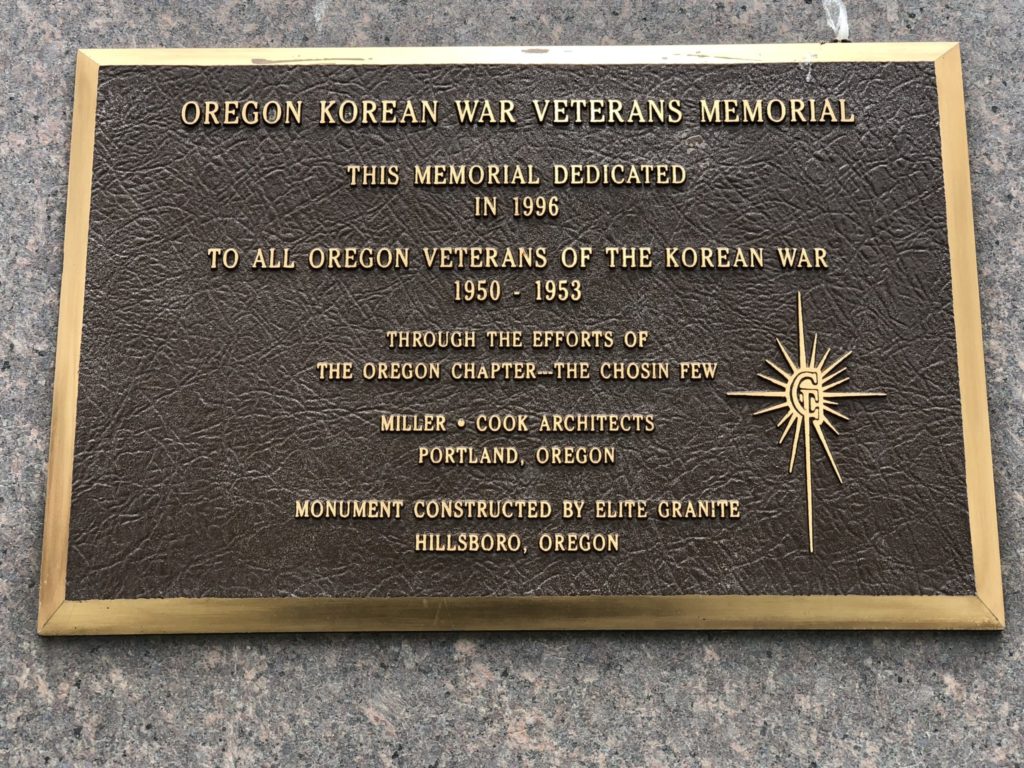
More than 40,000 people from 30 nations worldwide died in the Korean War (June 25, 1950 - July 27, 1953). We honor them as we hope for peace.
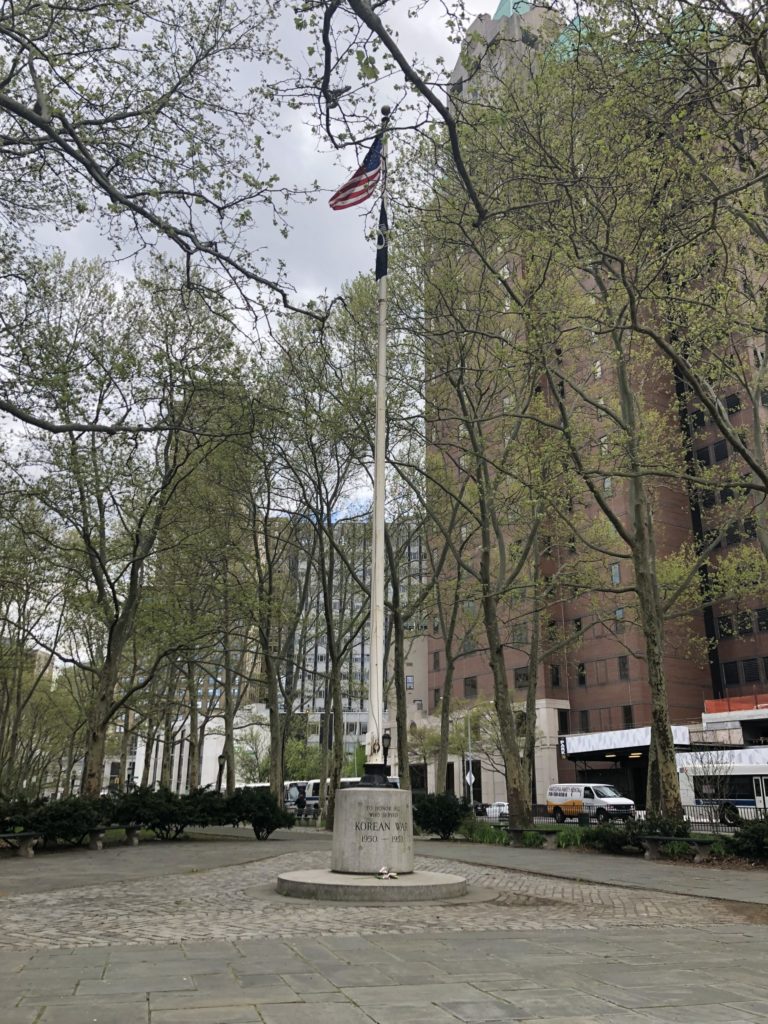
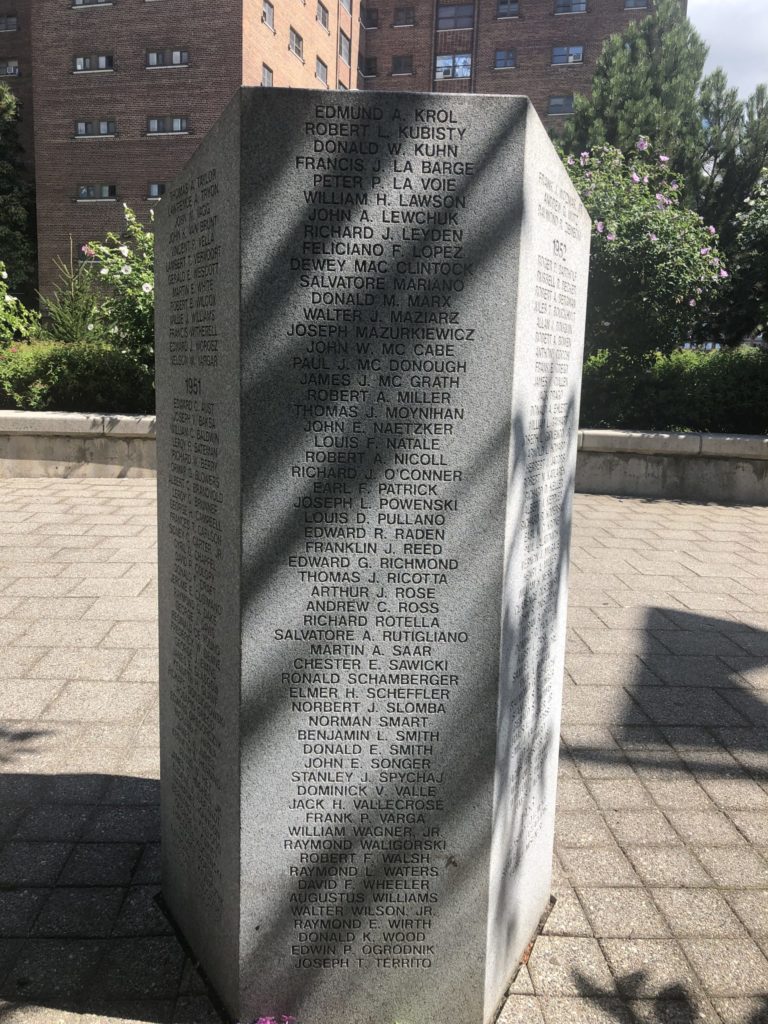
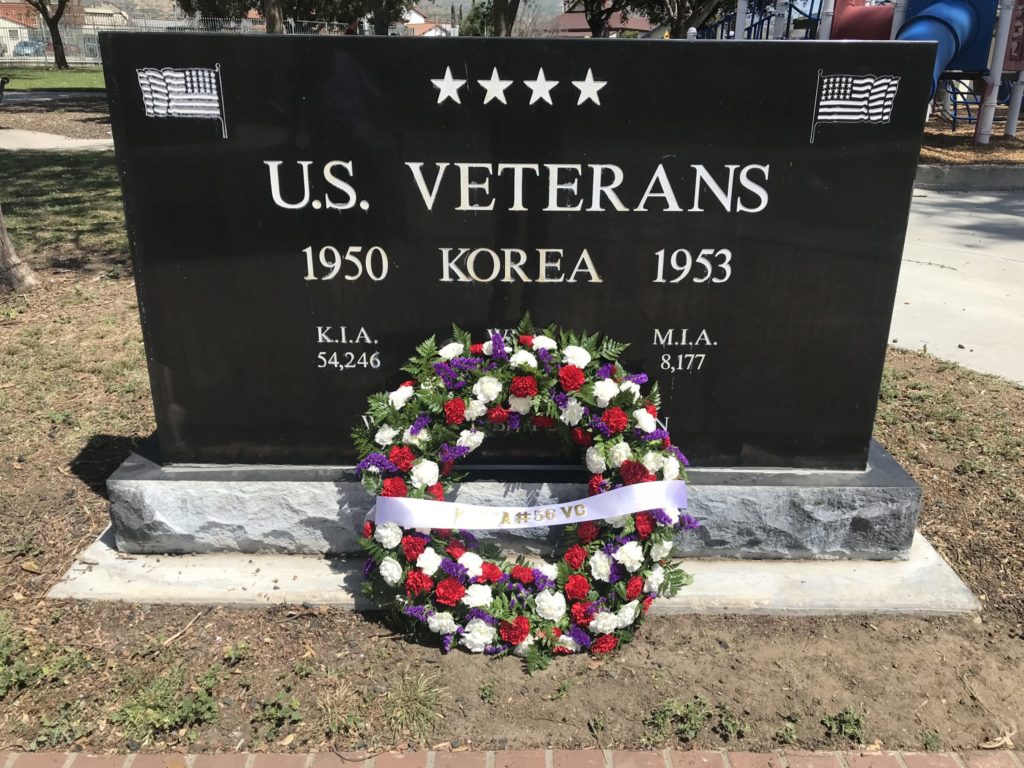
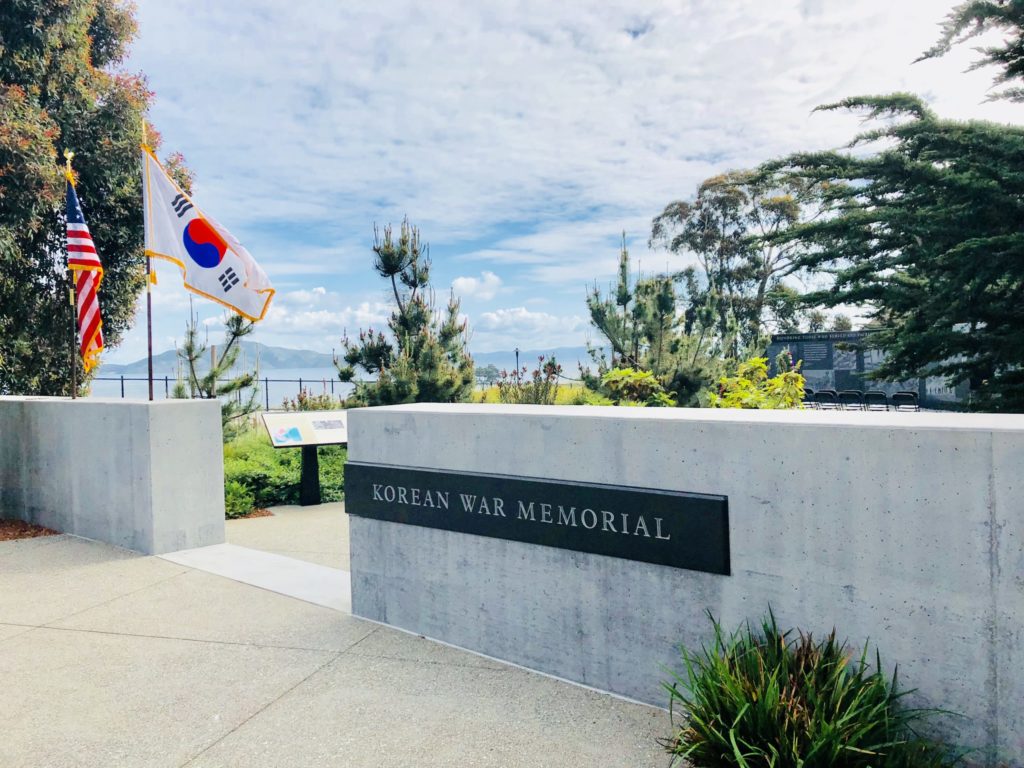
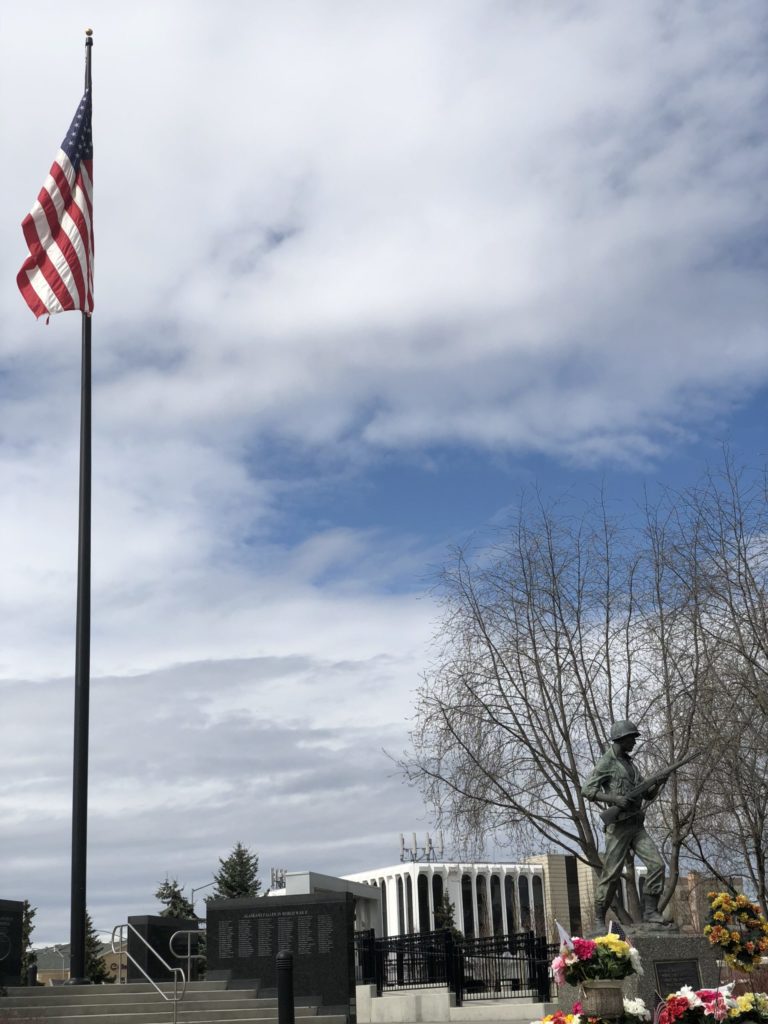
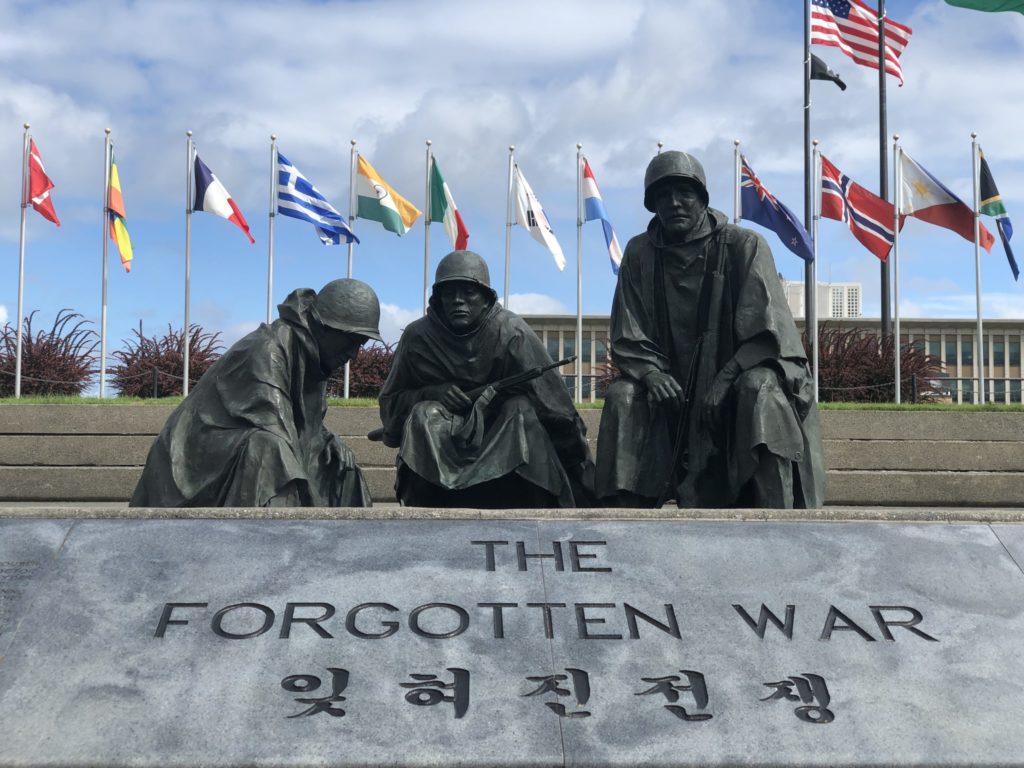
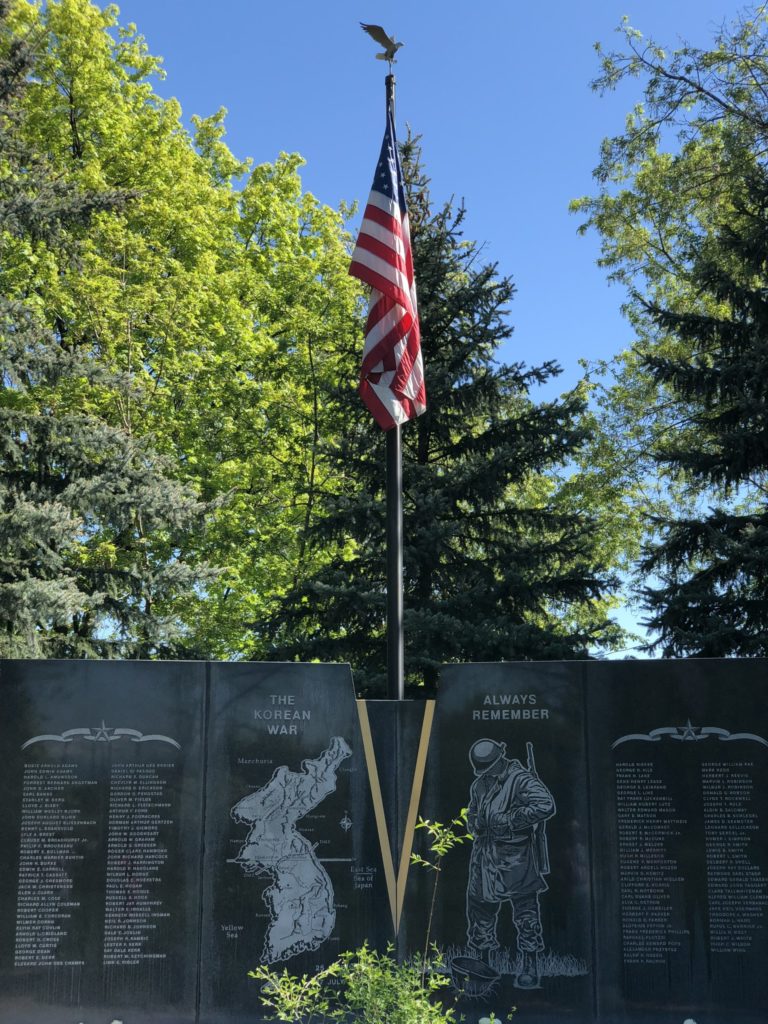
Click on a pin on the map above to visit a Korean War Veterans Memorial near you and pay tribute to the veterans and their fallen comrades. You can also explore these featured memorials and stories:

Featured Memorials

Featured Stories

– 2004, ¿no?
– Un poco…
– Más alto.
– Sí.
-Doménico Adorno.
– Sí, cuando, cuando, ¿participaron en la guerra?
– Nací en el pueblo de Trujillo Alto. A los 21 años fui reclutado por el ejército. Me enviaron a su país, Corea. No tengo buenos recuerdos. LO que tengo es un sentimiento porque muchos han ido ahora y dicen que Corea está muy pero muy alertada, muy avanzada, pero todavía en mi vida no capto, todavía yo tengo a Corea de 66 años atrás. Yo estuve en Chon todo el tiempo. Estuve en una oficina del tercer batallón. La oficina pertenecía al 65 de infantería. Estaba localizada en una universidad que había sido destruida por los americanos para sacar al enemigo, a los coreanos… metidos. Tuvieron que bombardear ese edificio. En ese edificio había partes que se podían usar, y ahí estaba yo en una oficina. Yo estuve 13 meses, un año y un mes. Mi trabajo allí era que me enviaban el informe, informe todas las mañanas de los muertos, de los desaparecidos, de los heridos durante la noche del cuerpo del 65 de infantería. Había mucho conocido mío. Todos eran puertorriqueños. Para mí era un dolor, aunque no los conociera físicamente, pero eran mis compatriotas. Eso es un dolor que llevo, ¿entiendes? Porque todavía conozco descendientes, descendientes de esos muchachos que perdieron la vida allí. Cada vez que los veo me traslado a Corea. Esa es la parte primordial del viaje a Corea. Bien, tengo otros recuerdos mucho más tristes del pueblo coreano.
– ¿Visitó a Corea el año pasado?
– No.
– ¿No?
– No, voy a visitarla.
– ¿Vas, vas visitar el mes de septiembre?
– Sí.
– Ah, ¡ok! Sí.
– Pues aquel tiempo ustedes no habían nacido.
– Sí, sí, sí.
– Fue un tiempo triste para Corea. La guerra destruyó la manufactura, destruyó la agricultura, y Corea vive… de la agricultura, de la pesca, bueno. Recuerdo, por la tarde cuando yo salía de la oficina, se había todo empolvado porque los edificios son hechos de un material, no recuerdo ahora, que es como tiza. Salía afuera. Había un, una reja para no entrar al edificio donde estaba la oficina. Nosotros pegábamos allí… y eso… triste ver cómo las mamás…
[HABLAN EN COREANO].
– Sí, sí, sí.
– Lloraban pidiendo comida, y muchas veces hacían cosas indebidas, cosas indebidas con sus hijos. Yo tengo mis hijas ahora, mi nieta, y eso me lleva, ver un pueblo destruido físicamente…
– Sí.
– Y moralmente.
– Sí, pero ahora es muy…
– Eso es distinto, pero yo no lo he visto.
– Sí. Gracias.

>> My name is Adrid Fieren. I am a man of 85 years old. I served in the Korean War with NORMASH in '52, '53. NORMASH was Norwegian contribution among the nations that helped South Korea to defeat the North Korean War from North Koreans. NORMASH is a mobile army surgical hospital. The main purpose for NORMASH is to take care of soldiers directly from the front line, wounded which has to be X-rayed and to be operated by surgeons. NORMASH therefore was placed approximately 10, 12 kilometers from the [INAUDIBLE] front line. We were a part of 8th Army and had, as far as I remember, three divisions to serve soldiers from. Soldiers coming into NORMASH was treated there and had to leave before the 3 days. Then the patients had to [INAUDIBLE] other hospitals. NORMASH was served by, I think, approximately 600 people from Norway. Each continent each period of 6 months, and then 106 persons on each period. I was in the guard, controlling all together with then all the Norwegians, and our duty was to guard camp to serve the borders. What do you call it [INAUDIBLE]? >> Barbed wire. >> Hmm? >> Barbed wire. >> Barbed. >> Wire. >> Wire but [INAUDIBLE] to be in the main gate all 24 hours. Together with [INAUDIBLE] Korean soldiers, a soldier from ROK Army. AMASH, the main thing in AMASH is of course the hospital itself, but it has many service functions around [INAUDIBLE] transport service in the camp, guarding and so on, and we had, I think it was approximately 30, 40 ROK Army Koreans [INAUDIBLE] guarding people. I think there were approximately 15, 20 and [INAUDIBLE] to maintain the camp itself. Then the nights especially in the guard, we were two then, one Korean and one Norwegian. We had difficulties, of course, with language, but we tried to communicate a little. But one thing we learned each other, that was a song. The Korean has a folk song called [FOREIGN LANGUAGE] and the Korean colleague on guard, the Korean learned us [FOREIGN LANGUAGE] and we learned him [FOREIGN LANGUAGE] a Norwegian folk song, and the [FOREIGN LANGUAGE] we learned goes like this. [Lyrics] [FOREIGN LANGUAGE]. A little like that, we learned, and perhaps in Korea, an old man of 80, perhaps he's singing [FOREIGN LANGUAGE] maybe. Why did I go to Korea? Well, I was already 20 years old. I had finished first military service in regularly in Norway, and we were all volunteers, and on that time, I nearly didn't know where Korea was, but I had to look up on a map and find the little country called Korea, but it was the adventures, one thing, to travel all around and half around the world. I'd never been in plane before. I'd never slept in a hotel before. It was new adventures waiting, maybe a little to take part in a battle against communism, but I wouldn't say that was the main thing for a young man on that. However, it turned to be a very fine trip. Six months after the War, Korea is one of ... We used to say that no other country in the world is so clever to say, "thank you," [FOREIGN LANGUAGE] as ... You know [FOREIGN LANGUAGE]? Norwegian ... as the Korean. I am so happy that I have been four times back on revisit trips. >> Show us that picture where you went to Korea and that story of the nurse and the patient. >> Yes, that's a good story. You see here we have a book which we, the veterans in Norway, has made possible, and it is also translated to Korean, and here, I can show you one picture. No, it's not here. It's in the magazine from one of the revisit. This was celebrating the 60 years of peace. >> Armistice. >> Huh? >> Armistice. >> Armistice, yes. It's not peace yet. There we had a nurse who served in the very first continent in '51, and she was taking part in that trip and [INAUDIBLE]. You see this? That's a lady. Her name is Gerd Semb. She is now a lady of 95, I think. When we someplace on that trip, I think it was in Uijeongbu, we had a lunch there, and when finished her lunch, going out, there came a man, this man to Gerd and saying, "Ah, I must thank you. I was young man, and I had destroyed my face, and you treated me." After more than 60 years, it seems this happening. That was a very funny and a very good story. >> You're on the cover of the magazine. >> Yeah, this is the magazine for the Norwegian forces. >> With Gerd. >> Yeah [FOREIGN LANGUAGE] is the name of this. >> Who are the other two ... >> Here is also the lady there, yes. >> And who is the other lady? >> And if it is of interest, this is me, and this is the Minister of Defense in Norway at that time. She also followed this trip. >> So what did you think about Korea? >> Now or on that time? At that time, Korea was more or less a ruin. In the place where we were situated, the battles had gone four times through, so it was no houses, no buildings, all destroyed. The people who were there lived in houses built of soil and equipment they held after the battle. Especially fort making ceilings on their houses, they took boxes of beer and open it so it was more like this. If you took the bottom and the top of a box of beer, you will have a flat metal, and many of those was how they built the ceilings, top of the ... >> Roof. >> ... roof, yes. Nowadays, Korea, the first time I visited was in '84, I think. It was a new modern country. It was unbelievable for me to come back and see this wonder, and the Korean people, I love them. I really love them. >> Number one. >> Number one, they are number one. >> That's number one. >> And we have been so happy. We have this veteran association to have a very, very good connection with the Korean ambassador. He is number one. So I think me and all the other Korean veterans also are very fond of the Korean people. >> Well, we thank you. >> Thank you. >> [FOREIGN LANGUAGE]. >> Enough.
>> This reunification between families is, at least to person outside the Korean nations, I think it's a little bit peculiar. This is not really a reunification. They meet for 2 days, and then they split again, so it's ... But anyhow, I think it must be very important to both the Korean nations, the people of the two because it's really heartbreaking to know that families were split because of the Korean War. And so I think this of course is very, very important to a lot of people both in South and in North Korea, so I hope it will continue. Definitely I hope so, but as you know, it's very much a result of the political game between the two governments, I think. I think that perhaps today there is hardly any need of a Swedish-Korean friendship association because there are some very good relation between our two nations. I think Korea is quite well known in Sweden today and especially to the younger generation with an interest in Korean popular culture. Korean films are quite popular in Sweden, Korean music. And this is the purpose of my association, is to spread information about Korea and to promote exchange, and this is what we do, of course. We have a magazine, and we have also a scholarship that we annually give to a young Swedish student that wants to study in Korea, and there are a lot of Swedes, young Swedes going to Korea to study today, and we have ... Every year we have something like 30, 40 applicants for this very small scholarship, and we know that there are many more going there, so there is a very good relation and quite well-spread knowledge about Korea today in Sweden. It's quite rewarding also in Sweden to do this, and still there are many connection. Many Swede in Korea, like in Korea, Sweden, we have something like 70 or 80 companies established in Korea with offices, representatives, so there are many Swedish companies on the Korean Peninsula, but Sweden, I can find perhaps six or seven Korean companies, although they are very big, Samsung, LG, Hyundai, Kia. I think they are the four. Hankook Tires, so that's the five. I don't know any more. I think there is more need of spreading the word about Sweden in Korea than the opposite way, I think, but anyhow, when you go to Korea and you say, "I'm from Sweden," many people are more than friendly. They are very enthusiastic, and they think very highly of Sweden. Sometimes I may get a little bit embarrassed about that, and I think that many Koreans think that Sweden is the perfect country, but of course it's not, but anyhow. There are still ... There are many, many connections with Korea and Sweden. We have quite a few adoptees. Almost 9,000 Korean children was adopted to Sweden, 3 years, of course. It started after the Korean War but still today, it happens. More rare, but it happens that Swedes adopt Korean children, and yeah, so still we send some military personnel there every year. Five persons goes to Panmunjom. >> Well, I'm sure as Koreans tell you when you're there and the veterans when they're there, we are very grateful. >> Yeah, definitely. >> Because we learned, especially Koreans learned medical, a lot of medical ... >> Yeah, yeah, I think so. >> ... techniques from the Swedes, got that from the hospitals, so thank you, and thank you for your service. >> Okay. It was ... That's a perfect assignment for a military man as long as nothing happens. >> Well, knock on wood that can continue. >> Definitely. >> Thank you. Thank you. >> Thank you.
>> My name is [INAUDIBLE] Jones, 24th [INAUDIBLE]. I was born in 1933. I lost my friend in Korea. I was very lucky myself. It was the Hook, it was, and I was transferred to 29 Brigade, so I didn't go in the Hook, and unfortunately he was killed with a mortar bomb. I tried to go and see his family, but I transferred my home. I was living up [INAUDIBLE] Wales, so I would've liked to go up to see him, see the family, but [INAUDIBLE] but it's really awkward if you got transferred on your own, and it's [INAUDIBLE] or famine and all that way. Yes. >> Hmm. >> So I would've ... he must probably ... he got ... Well, I'm thinking they couldn't have relatives there. No, but it's a lot of ... as time has gone now. Yes. Yeah. >> What do you remember about ... You were part of the Welsh Regiment, right? >> No, no, I was with the Duke of Wellington Regiment. >> But you're Welsh? >> Yeah. No, that's Yorkshire. What it was, I was an officer in service, and the battalion ... The Welsh Regiment was pulling out when I was going into Korea, and then this battalion then, the First Battalion, the Duke of Wellington's, was coming from Minden in Germany, so being an officer in service, it was put in there because they was understrength. Battalion was understrength. >> Mm. >> So I ... >> But you're ethnically Welsh? >> Pardon? >> But your background, you're Welsh? >> Yes, oh, yeah. Mm. >> Mm. And you said the friend that died ... >> Yes. >> ... was ... >> He was from ... >> He was Welsh, too? >> Welsh, oh, yes. >> Was he one of the fallen? >> Pardon? >> Is he one of the 32? >> Jones, same as mine, looking for Jones, private he was.

>> My name is Joseph Wagner. I was during [INAUDIBLE] tough years in the Luxembourg Army, and one part of this occupation from back in the Korean War. I engaged in 1950, and I was sent to Korea with the Luxembourg detachment. All the people, they were volunteers. They had all volunteered, and we were attached to a Belgian battalion. We couldn’t afford to have a big force, to have all the logistical facilities, unit command, but we were all the time with Belgians attached to a Belgian company. And so we went, before the war, sent to a Belgian training camp. We did all the training which was useful for fight, for a soldier to be engaged in a war, and after that, we were sent to Korea on a Belgian boat. It was called the Kamina. We went on a Belgian boat, the Kamina, which was not very comfortable. We had very hard time during 6 weeks, being from one sea to the other, and we arrived. We started on the 13th of December, and we arrived in Korea on the 31st of January. It was a long way, yeah? So then we were received in a reception center. We went on training again, what we found out by contact foreign units who had already fought in the Korean War because we came in. Then the Chinese were already in the war. They started in November, and we arrived on the 31st January, and what I feel, we never saw a North Korean soldier. We were all the time engaged with Chinese because during the landing in Incheon, all the Korean units, they were cut off from their bases, and they had no contact from their bases anymore. And, well, our first mission was to fight them, and we had our first mission, was to control the communications of South Korea, and we were stationed in week one. Week one, that was our first mission. We were all the time patrolling the region to be sure that those people would not go making trouble in this area. And after that, we joined the third American division, and we were taken in offensive action that was south of Seoul. As I said, we had to … First crossing was the Han River, and then we went up with American units, with the third division, up to the 38th parallel. And from there, we trenched, our attachment. Then we were attached, the Belgian battalion was attached to the 29th British brigade, commanded by General Brodie. General Brodie, he was a jungle fighter, and when they sent him to Korea, there were only mountains and stones, no jungle at all. And, well, we were attached to this unit, to the 29th brigade, and then came the backlogged [INAUDIBLE] on the 23rd of April, and I was sent out on a patrol from the 12th to the 13th of April, and the Chinese, they were nowhere. Nobody knew where they were, because we had so many patrols during the night. Every unit had to send out patrols, and when I was sent out, I had … My mission was to see if a certain position was occupied, and when I came to this position, the position was occupied. We have a firefight with the Chinese occupation, and then we pulled out. We pulled out. We had one wounded, not by a bullet, but he was … He fell down on a certain position where he hit barbed wire or some kind of defense object. So we came back to our base, and I was called to the brigade’s operation officer, to the [INAUDIBLE] of the brigade, and then I told my story, that we were having contact with this position where we were both sent, and, well, that was very valuable information because 10 days after that, the war started. They started. The Luxembourg detachment was … North of the Imjin River was the other unit, the Luxembourg company, the Luxembourg … The Belgian battalion was north of the Imjin River, and all the other units from the brigade, the [INAUDIBLE], the oilers, the rifles, the [INAUDIBLE], they were south of Imjin River. And then when they attack, well, we had to, first of all, to hurt the position, 23 hours before we could move back, and we were already surrounded by the Chinese, and we were liberated, the help by air strike and by tank patrols. They cut the way from the Chinese, and so we had the chance to pull out, and then we went back. We went back, and during our retreat, we had, from time to time, what I call retreating operations. You had to occupy a position. You had to pull out. You had to occupy another position to make the aggressor that came from time to time on the resistance. And then we kind of came back to, well, south of Seoul. I don’t know the town anymore, and then we were on reserve of the brigade because the brigade was not operative anymore because they had already lost so many. They had lost one battalion. They lost the battalion, was wiped out on their position on the Imjin, and so the brigade was what we call in reserve. And after that, we were patrolling, all the time, the Imjin River, and that is where we had two wounded, two wounded on the night patrol, and we … Because the Chinese had all the time infiltrators across the Imjin River, and they were patrolling the whole region every night, every night. So we had two wounded, and they were evacuated to Japan, and when they had been, the treatment was up, they came back to our position. They came back to our position again. And, well, from there, we came also on a very comfortable situation because we were also reserve of the brigade. And from there, we stayed on the position making patrols on the level of the battalion, what they called a sweep, a coup de ballet, a sweep, to find out where the Chinese were because the Chinese, after our offensive action, they had been thrown out. They had been thrown out. And then of the first of July, we had very big operation, the Luxembourgers with Belgian battalion, Belgian company, and that was, we had to occupy the bridge head across the Imjin River. The bridge head, we had to make our position and when we moved up, we crossed by boat. The Imjin River was very swollen. It was very high, and we crossed by boat, and the British engineer troops, they took us along. And when we came on the other side, there were some people left on the village. They said, “Well, they are 800 men who have just left the position we occupied,” where we should occupy our bridge head. And after that, after we were occupied, we were attacked by enemy fire, by Chinese fire. They were occupied about 800 to 1000 meters in front of us, and we were taken in by fire. They attacked us by fire, and, well, as I was on the side, I had all the time, the possibility, the facility to call for artillery fire, and I knew exactly where they were, and I called artillery fire on their positions, but they were very clever soldiers. They were very, very successful and very skillful. And then a Belgian company was moved up to find out where the Chinese were located, and when they came up to the position, they were attacked by the Chinese, and they had to pull out. And we were on the favorable position to have to help them by protective fire, and all our men, all our, well, platoons started to give supporting fire to the Belgian company, and the company commander, he used to say all the time, “If I would not have had Luxembourg platoon on the 1st of July, my company was wiped out,” and that was a very good compliment to me and to my people. So we had to pull out again. We were the last one section after the other, and I was with the last section, and I was in the last boat being taken over in the Imjin River on the other side. And then the whole battalion, and some supporting elements of the brigade, they all were shooting to protect our reply. So when we were on the other side, well, we were safe again. We were safe because the Chinese, they were not … They had no means to follow, they had no means to go further than what they have done already because the Belgians, they had three or four wounded and so many hurt, so many hit and so many wounded. And then we went up to our position again from where we were located, and then on the … When did we came back? On the beginning of September, we were relieved from our position, and because the idea was to take the first battalion, we were sent in Korea, the Belgian battalion, to be sent home again, and we arrived in Rotterdam on the 2nd of October, 1951, and then we were sent back home again. But there was one more very important incident. Before we were liberated from the position, we had to take part in an offensive action that was what we call a diverging, and we were attacking., We were attacking a certain position, on a certain position, the Chinese. But on another sector, in the middle sector of the whole line, there was a very big attack moving on, pushing the Chinese further to the north. And during the night of … I forget. It was in August, the 7th or the 9th August, we were attacked again during the night by the Chinese, and we were … They were so close to our position that I was afraid that we would not have enough ammunition to fight them for a certain time, but that didn’t happen. The Chinese, they moved back again. We drew them back, and then we came back [INAUDIBLE] Imjin River and then we were called to what we call, to a position where we can have a rest, a resting position, and then we moved up. We handed up all our equipment, and then we were taken to Incheon on the boat, the General McRae, and, I guess, that must be in September. Yes, because we were 1 month on the way up to Rotterdam, and that was the end of the first detachment. We were sent back to Luxembourg, and then the people, they were sent on leave, and I went home to my parents, and that was as far as I had done as a Luxembourg commander and as a Luxembourg soldier during this war.

>> So how many Luxembourgers fought in the war?

>> How many Luxembourgers in the Korean war? At the whole, we were the second detachment that was created, and that was … We had 85 people in the Korean War. Eighty-five Luxembourgers were served in the war, and we have two wounded, and about 52 … No, 32 killed, and about 15 to 14 wounded. That was, for me, as a young soldier, a young officer, was a good experience. A good experience not only to fight another aggressor, but it was also very good experience how to handle people, how to handle people in a critical situations because I had to have confidence in my people, and they had to have confidence in me. I was a leader, and we have never had an incident or trouble that somebody was … I was very glad, and very glad. I had confidence in my people, and that was also a very big satisfaction for me when I came back. I had my people. Some had re-engaged. Six people had re-engaged, but where the other people, they went back to Luxembourg with me on the second of October.

>> You came back, and you volunteered. You said the 85 volunteered.

>> Yeah.

>> Including you, why do you think they volunteered?

>> All the other? Well, some people, they didn’t have a job. Other, they had maybe an adventurous spirit in mind because the adventure was all the time in the air, you can say, because people, well, they are excited, but most of those people, I feel they wanted to be soldier, and I don’t know exactly what were their feelings. If they were in to fight an aggressor and to help the Korean nation, I don’t know. My feeling was that I was engaged to help the Korean nation because they were in a very critical situation, and I was just coming back from school, so I said to myself, “Well, this is a very good occasion, first of all, to find out what is going on as a leader in a war.” And my second motivation was to help the Korean people because what we had heard, that the Korean people, the poor farmers, that they had been attacked by a very well-equipped aggressor. Yes, that was … When I started, I was at school. I didn’t know anything about Korea. I didn’t know where this country was, and I didn’t know what was going on, and finally, we found out that there was a separation between South and North which was because the first President, Syngman Rhee, he made elections in ’48, and when the people of the North, they had no rights because they were already under the domination, under the rule of Nam Il-Sung. Nam Il-Sung was the first president.

>> Premier Sung.

>> They did not take part in this elections, and Syngman Rhee had already in mind that he would be the president of the whole Korea. And, well, it came in another way, and, well, they were really surprised, but the American, I mean, information of this at G2, in this area, they should have known that something is coming up because if you start an aggression, you have to assemble so many units and I don’t know. Well, they had no chance. There were not many American units to block them, and so that was the reason why they had a chance to go so far to presume. They … Well, it was not far away that they had thrown the whole United States … not the United States, the United Nation Army in the sea again. And that was … That would have been a very big operation to have ground again in South Korea, and fortunately, in this few place on the Naktong, fortunately they stopped. They blocked the Chinese offensive, Chinese they were, and that was very … the biggest luck which could happen, and then after the Imjin, the Imjin landing, the Imjin landing by MacArthur where he cut out all the bases, all the units who were cut out, and then they broke out. General Walker, he was commander of the 8th Army. He broke out and then to join the forces who had made the landing, the landing that was at the height of Seoul, because from Imjin, they went in direction of Seoul, and Walker, he broke out in the same way because he had not very much resistance because all the North Korea, they were blocked. They were all cut out, cut up. And so they came together, and then from there on, from this part on, it was the United Nation forces. They were, we say, so many nations had engaged themselves, and at the end, we had 21 foreign nations fighting the Chinese in the Korean War, and that was the lucky part, what I have found, and it was very done well. Came the part when MacArthur was relieved from Ridgway …

>> Truman.

>> Huh?

>> President Truman.

>> No. No, MacArthur, he was liberated from his post or sent out or sent back by Truman, and he was replaced by Ridgway, and from there, from that point on, Ridgway was our operative commander, and he was a very good man. He made many punishment operations, what he called, when the Chinese, when we had attacked or found out some posts that they had taken back so many soldiers of the United Nations. Then he made a punitive operation. He said, “Now we will punish them,” and then he attacked on certain points. Well, I could not say much more about …

>> You must be very proud of …

>> I was.

>> … the Luxembourgers’ contributions.

>> Yes, I was. I was really proud, and I was also, not only to myself that I succeeded in my, in the whole field. I was very proud to have done a very human mission, and I was very glad that when the South Korean War was over, and the people could recover, and I was very much surprised what they have done during the last 60 years. I was so much surprised every time when I was in Korea. I was there already eight times, six or eight times, and I was all the time surprised for also about the kindness of your people. They are so kind and so grateful, very. That’s what is also, when I come back, all the time, they say, “Oh, if you would not be our liberators, if you would not come to Korea, what would happen to us?” And so that was what … And in the museums, Luxembourg is very well represented. In the museums in Korea, Luxembourg is very well represented. And then when after that when we followed, when we are back, we followed that very closely, and we were glad to hear that they have had finally come to agreement to cease fire. Not to … at peace because they are still in war. North Korea and South Korea, they are still in war, and I wonder about the motivation of the South Korean units. They are very good soldiers. They are very, very … Oh, I can’t imagine that the North Koreans, they would not come along far if they were there to attack, but there is one thing. I was in one of those tunnels. They had created eight tunnels under the Imjin battle, under the Imjin River. I was in one of those tunnels, and when they would have attacked again, they were not ready, but they could have attacked it with so many divisions across one tunnel. Well, that would be, what we call the most biggest evil which could have happened to the South Koreans because they found only out that there were tunnels. There were tunnels inside. They could not … They found out that the soldier, he was so vigilant, and he said he heard some noise, and went, “What is that?” And then they looked, after that, in making research through the earth, and then they found a [FOREIGN LANGUAGE], we called it. How do you call that?

>> An empty [INAUDIBLE].

>> An empty hole. And they investigated, and they started to look after that, and then they found the tunnels. That was also very lucky. Oh, because that was … No, they had no good things in mind, and luckily, I was very, very happy that Korea had developed in this manner. Good army, very well organized in the industrial field. Oh, I was very lucky to hear that Korea had recovered.

>> Well, like you said, we are all very grateful to you and your fellow Luxembourgers for your service.

>> Thank you.

>> Thank you.

-Mi nombres es Víctor Manuel Nuñez Gamez, perteneciente a la Armada Nacional. Me retiré con el grado de jefe técnico. Estuve en Corea durante el año 1954, 55, viajé en la fragata Almirante Paella en su segundo viaje que participó en la Guerra de Corea. En la experiencia que tuve allá fue de tristeza, de melancolía, de ver la pobreza que existía en ese país, de ver sus… No se veía calles, sino pura tierra, puras montañas. Y hay una anécdota muy especial que tengo que es la que me ha marcado a mí. Por orden del comando de la Tarea 95 de los Estados Unidos, nos dieron la orden de arrasar un campamento que había en tierra. Con el dolor de nosotros, de todos los tripulantes, del comandante del buque, César Reyes Escanar, tuvimos que destruirlo, habiendo niños, mujeres, hombres, ancianos habían. Pero por orden del grupo de Tarea .95 de los Estados Unidos. Estábamos en guerra, había que cumplir las órdenes, como dice el militar: el orden que no se cumple, se va la persona. Entonces teníamos que cumplir ese, ese, ese mandato. Fue doloroso para nosotros, fue doloroso. Igualmente, tengo otra anécdota: nos tocó que llevar cuatro prisioneros de guerra, transportarlos de Corea a una base… a una base de, de, de Japón, cuatro. Nos hicimos amigos de ellos. Y la tristeza nuestra al desembarcar ellos, tuvimos que desembarcar en ellos en Sasebo, los tuvimos que desembarcar para entregarlos al gobierno de Japón porque eran prisioneros de guerra. Después de esa amistad que tuvimos, nos dio dolor ver que partían y se iban en una lancha, y se los llevaron para allá. En forma resumida: volví a Corea en el año de 1900… 2015, volví en agosto, volví en Corea. Sorpresa para mí grande de ver una ciudad maravillosa, todo cambió. De esas calles de arena, de esas calles de tierra, están convertidas en avenidas. Esas, esos, esas casuchas que habían se habían convertido en edificios, pero edificios altísimos. Eso para mí, ver ese cambio, pues, me agradó tanto de ver la pujanza del coreano, especialmente Corea del sur, de ver esa valentía, de haberse levantado de la tierra para encontrar a una ciudad pavimentada, una ciudad con edificios, una ciudad moderna. Su gente, maravillosa. Me vino muy muy muy encantado de ese país nuevamente. Y la diferencia que hago entre esos dos, eso es, como decimos, algo, algo que, que no puedo narrarlo, porque la diferencia de ver la pobreza, de ver la forma en que fui por primera vez, a cuando regresé por segunda vez. Fue algo maravilloso por la segunda vez que fui. La gente muy amable con nosotros los colombianos. Estoy maravillado y doy gracias al gobierno de Corea del sur en este momento por la invitación que se me hizo y que se está llevando a cabo anualmente, anualmente está viajando un veterano a Corea, le están dando pasaje, le están dando alojamiento, le están dando todo, en agradecimientos por nuestra participación en esa guerra que nosotros, inclusive, nosotros los colombianos, no teníamos ni arte ni parte, porque no era un país, no era algo que perteneciera a Colombia, era un país extraño para nosotros, completamente extraño. Sin embargo, fuimos voluntariamente, fuimos porque quisimos, quisimos, como se dice, pelear por la democracia y la libertad de ese maravilloso país como lo es Corea del sur. [INICIA MÚSICA]. [FINALIZA MÚSICA].
>> Well, actually, I really don't know from where to begin. It's all the same. I was a young captain with Second Battalion of the Parachute Regiment when we got orders to move by air to South Korea to supplement the effort of Custodian Force India, which consisted of five regular battalions with the brigade headquarter. Perhaps Custodian Force was part of Neutral Nations Repatriation Commission with its headquarters at Pyongyang, and they [INAUDIBLE] because our job was essentially to repatriate the prisoners of war. No decision had been taken how to dispose of the prisoners of war. So we ... The brigade went there by sea, but having reached there, they realize that the force was not adequate to look after and manage the prisoners-of-war camps, so we, my battalion, which was the parachute battalion, was moved, and the Globemasters were provided by America. I had never seen a Globemaster because the biggest aircraft we had was a Dakota with a capacity of 20 and a Fairchild Packet, which was the World War II vintage aircraft with a capacity of about 15, 30 to 40, and this Globemaster could carry in two tiers about 130 troops fully with their kit, so it was a great experience really. We stopped at Clark Air Base in Philippines early in the morning. Now it was an eye-opener. It was about, I think, 3 or 4 a.m., and the troopers were already lining up to have their breakfast, and we, you see, the Indians had by and large in that period of that stage of our development was hardly 5 feet, 7 inch, 5 foot, 6 inch, and there we saw Afro-Americans lining up, and it was a tremendous experience, and the amount that they could eat for breakfast, it was really ... From there, we were taken to Japan, and I think it was Tachikawa or some airport, and then we were transferred to a battleship, which took us to the Incheon airport. There Mr. Syngman Rhee was the President of South Korea. He thought that Indians were pro-communist. Although India was the chairman of Neutral Nations Repatriation Commission, which consisted of India as chairman, and we had a very famous general officer, General Thimayya, who later on also served in the United Nations. Besides India, there was Poles and Czechoslovakian representing the communists and I think if I recollect Norway or Sweden ... >> Sweden. >> ... [INAUDIBLE] the other part of this force, of this headquarter, and Custodian Force India under the general officer consisting of five battalions I mentioned earlier, so Syngman Rhee refuse to let us go by train from Incheon or go through South Korea to the demilitarized zone where we were destined, our Custodian Force was placed. Again, it was a great experience for me as a young officer. Helicopters were unknown in India in those days, but seeing helicopters from the ship like you see ... It was an experience again. The helicopters were small. Just they could take about four or five along with their complete as we call kit [INAUDIBLE] operational kit. Everybody goes with it. And we were put in the demilitarized zone, and we landed there. I was then [INAUDIBLE] rifle company, which generally consists about 18 men, and it was about 5 in the evening, and it was getting bit dark when I was given orders to relieve another company and take over straightaway the prisoner-of-war camp. There was no head count. I was just told that about 500 prisoners of war were in that camp. There was about five or six camps there. And lo and behold, lo and behold, middle of the night, and it was a subzero kind of temperature. We were not equipped really for the Korean climate. We were not equipped. There was a breakout, and our sentries on the [INAUDIBLE] were firing to stop the exodus. It was a nightmare. We were in our under [INAUDIBLE] sleeping, and suddenly this commotion was taking place, and perhaps they had timed it also. They knew they were very seasoned, those who had fought the war, but some of them were hard-core communists who never wanted anybody to either go to South Korea or to any Western countries, and they were creating terror in the camp, so any way to continue with this breakout, lot of them got through. They were very keen to go to South Korea or to go to south or to [INAUDIBLE] anywhere else, but it was a major setback for me that this happened when I was in command of the camp. That's a different story. I had to face a bit of disciplinary action for that. Then we were taken. You see, I appreciated the amount of hard work put by the generals of the American army to prepare a camp for about 800 soldiers and officers and be centrally heated. That itself was quite an experience that they were able to set up, and it was just [INAUDIBLE] canvas sheets and with some kind of heating arrangement in the center where perhaps diesel was being burned to keep the warm and also the ... You had the wooden floors and things like that and ... But one thing was that our senior commanders never wanted us to take on the United Nations, the American dress. They wanted us to remain ... They permitted the troops to wear clothes to be comfortable, but to officers, whatever we were entitled to, then what we had taken, which was certainly not ... wasn't adequate but to set an example that the leaders themselves were being given Indian rations whereas the troops were allowed to have rations with the other United Nation troops were. Initially we [INAUDIBLE] because we were uncomfortable. >> Mm. >> The clothing wasn't warm enough. Neither was the food. It took us hours by pressure cookers to cook the [INAUDIBLE] and the [INAUDIBLE] and all that whereas the troops were being fed the Californian oranges and the lamb and the ... all that frozen lamb and nice cheese. Anyway, gradually we were able to convince the senior [INAUDIBLE] that it is not [INAUDIBLE]. It's all right to set an example, but an example should also be related to the actualities on the ground and the situation. Now the ... We had also ... A hospital was also there to cater for. Let me concentrate first on the behavior of the core communist leaders. They had created cells in the compound, deep cells, wanted to give you protection against the climate, and second was that they used to torture those perhaps who were very keen to break away ... >> Mm. >> ... and torture them so badly that they will kill you, and in the morning, what you saw was two, three bodies being put on the gate of the ... which was a barbed wire kind of gate. It was a very tough situation, and you could do nothing. We could do nothing against the torture that was going on in the camps. Once we settled down, then I'm relating to what my job was. I was given the job of presenting prisoner of war from my camp to the team of NNRC, Neutral Nations Repatriation Commission, team, and each prisoner of war was exposed to them in a tent or something like that [INAUDIBLE] tent. >> Mm. >> And there each ambassador are part of that team will bring messages and those recorded messages but played requesting these fellows to come back to their own motherland, go back to North Korea, to China, wherever. But there was no force involved in this whole exercise, but as luck would ... bad luck for me. And these prisoners used to restrict so that they carry no weapons or no sharp ... to harm the ... There is a bit of representative of the NNRC. And we used to strip them, and as I said, my bad luck came. One of the prisoner had kept a blade somehow. I don't know where. And he slashed one of the faces of [INAUDIBLE]. There was a commotion. >> Wait. This is very ... >> He had hidden a blade, a shaving blade, somehow, which we didn't know this, and he slashed the faces of one of the members of the Neutral Nation Repatriation Commission's team member. Anyway, he was overpowered, and of course I had to face the music later on through my normal army channels, but the officer who was conducting an inquiry into the whole thing was very considerate that it wasn't something intentional. There was no motivation on my part to relax, and therefore I was honorably ... And it was quite a bit of tension [INAUDIBLE] as a young officer I had then about 6 years service, and I was about 26 years old then. >> Mm. >> These were the ... But the life generally was very made reasonably comfortable. Later on, they permitted us to have the [INAUDIBLE] and all those facilities with the other United Nation troops were having. But what ... As a young officer, it was an eye-opener, and you match yourself professionally and otherwise in smartness, in alertness, in [INAUDIBLE]. We ... I thought, "I am as good or even better in a sense than officers from the other ... some of the other countries," so it built a lot of confidence in me as an individual, and perhaps that's the reason that I rose to be the vice chief of the army later on in life. >> Wow. Vice chief of the army? >> Right. Right. >> Wow. >> So we used to have ... Once I was taken off from that and I was made adjutant of the battalion, that means I was not involved in the looking after the prisoner of war but managing the affairs of the unit. We had a comfortable stay there. Our officers' mess was there. All the facilities were given, even [INAUDIBLE]. >> Mm. >> And we used to naturally sit in a huge transport carrier and which was warm enough to [INAUDIBLE]. I remember seeing a movie of Nat King Cole, the great singer of those days, and the son I remember, "What a Beautiful World," "What a Beautiful World," which was a great song in those days. Then we celebrated our festivals, Diwali and all that, and showed to the rest of the [INAUDIBLE] of the [INAUDIBLE] and the others. Perhaps it must have been explained to you that we were five battalions. That means a brigade nearly would service about 5,000 troops. Indian troops were there, which is quite a contribution. Do not [INAUDIBLE] but later on. >> For how many years? For how many years? How long? >> Oh, yes. It was in 1953, '54. That means we came back about 10 months, 10 months. We were ... >> In 10 months, there were 5,000 of you? >> Mm-hmm. >> There were 5,000 of you? >> Yes. >> Five thousand? >> Yeah. >> For 10 months? >> Ten months. Yes. >> Wow. >> Yes. >> Because before the war, the unit was very small, less than 400. >> [INAUDIBLE] it was [INAUDIBLE] which was part of the ... But this was ... I'll show you the plate I have. >> Mm-hmm. Later. We can ... >> Later. We have a plate for that. Then also we got a chance to visit the NNRC headquarter, which was at Pyongyang, North Korea, and now North Korea, and there was again a world of difference between the attitudes, the reading of the situation. It was entirely [INAUDIBLE] aggressive. You could see there the aggressiveness on the part of ... The Chinese were still there too, but we were dealing with only prisoner of war. >> How long did that take, that process? So the armistice is signed, okay? >> Mm. >> And then so ... Then you start negotiating, right? >> Mm. >> The army, not negotiating. The negotiation was already done. >> Unite ... You see, United Nation was part of the fighting, so this was a ... I think under Geneva Contention or some, a Neutral Nation Repatriation Commission. Repatriation, which is a self-explanatory thing, was to repatriate or give an opportunity to the prisoner of war where they want to go, but again, it may be premature. Unfortunately, we were not able to achieve our task. No final decision was taken, and we had ... We returned the prisoners of war back to the neutral nations, and we came back ... >> So that ... >> ... without achieving the aim. >> And it took 10 months? >> Yeah, less than 10 months. >> Mm. So what happened to the person that slipped or slipped a person, the POW? >> I wouldn't know because that [INAUDIBLE] was taken by the Neutral Nations Repatration Commission. >> Was he Chinese or North Korean? >> Again, I wouldn't know. >> Mm. >> I wouldn't know because there was not written that they are North Korean, or they are Chinese or whatever. >> Because I know POW is still a very ... That's why the war lasted 3 years. >> Yeah. >> I heard ... >> Yeah. >> ... that after 1 year, by 1951, the battle was already kind of decided. It was all within the 30 ... along the 38th parallel. >> Parallel, yes. >> And it was just up and down and up and down, up and down, not different parts, but the reason why it dragged was because of the POW issue. >> Mm, mm. >> And it was hard to come to ... >> You would be surprised that I think [INAUDIBLE] came to India. >> [INAUDIBLE]. >> And ... >> Who did? >> And ... >> POWs? >> Uh-huh, and they were now ... They are part of our association, and they are businessmen there in Delhi. >> Wait. Wait. Wait. Wait. Wait. Wait. Wait. Wait. Wait. Wait. What do you mean? The two are Koreans? North Koreans? >> South Koreans. >> South ... Okay. After the war. >> South ... >> After the war. >> South Korean prisoner, they came to India. >> Oh. >> They opted for India. [INAUDIBLE]. >> They were captured by the enemy. >> Yes. >> And then when they were repatriated, they said they want to go to India. >> Yes. >> Interesting. So they are ... >> Actually, this fellow, the [INAUDIBLE], should be able to tell you exact name of this person. He was a businessman. >> Oh. >> Yes. >> Well, I guess ... >> But I don't think he is ... I don't know, but we keep on meeting him. We have get-togethers, association get-togethers, and he attends that. Whether he has given up his citizenship, that I am not aware whether he is [INAUDIBLE]. >> So the association has members of both the parachute, the ambulance and the ... your unit, right? >> Not mine only. Custodian Force India was the executive branch of the Neutral Nations Repatration Commission. >> And that was 5,000? >> That was 5,000 troops with a [INAUDIBLE] hospital, big hospital, not only an ambulance [INAUDIBLE] ambulance but a big hospital with all facilities. I think they could maintain ... The back strength was about 50 or so, big, big hospital. >> So all together less than 6,000 Indians went to Korea? >> Yes. >> And luckily only one died, luckily. >> Mm. >> How did he die? >> Hmm? >> What kind of accident? How did he die? >> How did he die? >> Mm-hmm. >> I don't know the ... >> The one Indian ... >> ... actual ... But again, while we were there, I mentioned their aggressiveness. They even want the General Thorat. He was a general officer of the Indian army who was the head of the Custodian Force. They were maltreating some prisoners, so he went in to see for himself, and there this aggressive lot, must be North Koreans or Chinese, they made him captive ... >> Hmm. >> ... a general officer, and then a big operation was ... More force was brought, and he himself was a seasoned World War II veteran. >> Hmm. >> So he was able to convince them that they cannot keep holding onto him. He will be free, so it is better that they do it in a peaceful manner rather than bloodshed. >> Hmm. >> And he was able to convince to them because the troops have then ... We were part of that to take action if something goes wrong. >> Hmm. >> So these kind of situations were ... Then we had ... On a Diwali day, I remember I led the ceremonial parade of the normal ... And we put up Malcolm ... I wonder if you ... You may not have heard. Malcolm is a martyr. How long you been in India? >> Two days, 3 days? >> Malcolm is an exercise. It's to strengthen your muscles and things like that. A greasy pole taller than this, about 15 feet, which you climb, a greasy pole, so you climb by maneuvering your body in a manner, and you reach on top, and then in a pyramid sort of fashion, more will join like that, then display ... And it was subzero. I think it about minus 10 or 15, and they are absolutely naked. >> Mm. >> [INAUDIBLE]. So what I mean is that a cultural sort of exchange was also there besides the military parade and things like that [INAUDIBLE]. >> Because there were so many different cultures there. >> Yes. >> So many different cultures. >> Rest of the countries were there. >> Yes. So it was very interesting. >> Have you been back to Korea? >> Yes. I went there in 2002. >> For the first time? >> No, 2002, yes, only once. I went there once. >> That was during World Cup. >> During the [INAUDIBLE] so was absolutely ... There were nothing. There was nothing standing in the capital, and one was really surprised to see in 2002 the development which had taken place. I think its credit goes to the South Korean or Korean as a whole, I would say, that the sense of discipline, the sense of dedication and also perhaps motivation through their education, through their parents, through their teachers, through the general society that they have been able to achieve wonders. >> I think Koreans have a strong sense of duty, and we are very grateful people, and I believe that we recognize that so many foreigners came to Korea to defend our freedom and that we owe it to all those who served to really rise above, rise from the ashes of war to become successful and prosper, and I ... Although I'm Korean American, I'm very proud when I hear that the Korean government really treats the veterans with the utmost respect ... >> Oh, yes. >> ... and gratitude. >> We've been receiving signed by the president of South Korea messages of this gratitude and also this system of ... And it is maintaining the link with the next generation and the next generation. Already the grandchildren are ... They go on this kind of program where they are taught. They mingle with people from all the countries, and also, I think they are even offered now scholarships. >> Yes. >> Yes. Thereby, you can opt to take a job even after to learn Korean language, and, yes, all these facilities are being given. >> Yeah. >> And we are really surprised that while ... Even China, China in 1949, '50, was much behind India in its GDP, and even throughout [INAUDIBLE] reign, it's only [INAUDIBLE] or somebody. When he became president, I think he became president after [INAUDIBLE] that he brought the technical know-how. Firstly, they were so proud that they disconnected. They thought that the Soviets were too overpowering and neutralizing their character, and so they gave that up, and then they had all the technology made up with Americas and see what they have achieved. They have become ... They are a superpower now. >> Mm. >> And so is South Korea. They are known as five tigers of Southeast in development in technology, in all sphere of activity. >> Mm-hmm. >> I wish that we in India could also somehow become a little more disciplined [INAUDIBLE] because, through discipline, we can achieve. It also moderates your character, your integrity, but in spite of our teachings, we are really civilizational, somehow the ... I shall be saying, but somehow the leaders, the political leaders and the bureaucrats have affected the development side. >> Mm. >> But it is improving. >> Yeah. >> It's improving. >> Yeah. >> Yes, and there is a hope. >> Yes, and I have so many Indian-American friends that they're ... The diaspora, they're very, very, very prosperous, and they'll bring back that kind of knowledge and ... because that's what Chinese ... >> Where are you staying in? >> I ... >> Stay USA? >> Washington, D.C. >> Washington, D.C. >> Yes. >> Yes. >> And there's an Indian-American congressman because I worked in Congress for a long time, and, yes, I think all over the world with many of the diaspora bringing back the knowledge and just the sense of, I guess, more discipline, like you said, because when you go abroad and you're not in your home country, you have to work as harder. >> Harder. >> And that's why I feel like I've achieved the American dream because, for my parents who sacrificed their life to come to America for us, we think we got to succeed, right? I think that's the same analogy of the Korean people. The parents all over the world, the veterans, came and sacrificed, so the Korean people think, okay, for them, to honor them, the people and the country, they have to succeed, and so I hope that ... I'm very glad you got to see modern Korea with the tall skyscrapers. >> [INAUDIBLE]. >> Yes. Everybody says there was only one bridge over Han River. Now there's 16 bridges, and I ... There's Samsung. There's Hyundai. There's ... all over the world. And I hope when you see that, that you feel very proud, that you were part of that making. >> Yes. >> Mm. I really hope that, and that's why I wanted to come, and I wanted to just ... I know you know, and you are proud, but it's also nice to hear it again, to say thank you again. >> Tremendous, tremendous. >> Yeah. >> [INAUDIBLE]. >> So I do want to say thank you. >> Yeah. >> Oh, in the Korean custom like in New Year or when you pay respect to the elder, we bow. >> Mm. >> That's the proper way of saying thank you, so I wanted to actually do that because this is ... I tried ... This is not sorry, but I tried to wear something a little bit kind of Indian to pay respect for you, so I'm going to do that because that's what we do, and I will say thank you the proper way that I was taught to do.
>> [FOREIGN LANGUAGE] >> My name is Yusef Gonidan. I am a retired sergeant major, and I work at the Turkish War Veteran's Association as the deputy president, and I went to Korean War voluntarily. >> [FOREIGN LANGUAGE] >> I was ... >> [FOREIGN LANGUAGE] >> When I went to Korean War, I was at the age of 19 years old, and when I went to Korea, cease-fire decision was taken, and ... >> [FOREIGN LANGUAGE] >> We changed to the US division, 25th division of the US, 25th division of the ... >> [FOREIGN LANGUAGE] >> We take their place. >> [FOREIGN LANGUAGE] >> I stayed at the front line for 6 months. >> [FOREIGN LANGUAGE] >> As I did a sergeant major reconnaissance, I served at the reconnaissance unit. >> [FOREIGN LANGUAGE] >> Six months later, US division took our place, and we withdrew. >> [FOREIGN LANGUAGE] >> Fourteen months later, we returned to Turkey. >> [FOREIGN LANGUAGE] >> I know that Turkish troops fought during the Korean War, as if they fought in their country, as if they are defensing their country. >> [FOREIGN LANGUAGE] >> In the beginning, I said that I went to Korean War voluntarily. If you ask me why I went voluntarily, freedom of a country was taken his hand ... Or one country was losing his freedom, so I wanted to protect the freedom of the one independence country, independent country. >> [FOREIGN LANGUAGE] >> Twenty-one thousand ... >> [FOREIGN LANGUAGE] >> Twenty-one thousand Turkish soldiers participate in Korean War. >> [FOREIGN LANGUAGE] >> Six more Turkish military served in Korea after the cease-fire. >> [FOREIGN LANGUAGE] >> Korean government wanted to keep the US, British and Turkish troops in their country after the cease-fire. >> [FOREIGN LANGUAGE] >> Even though 21,000 Turkish soldiers served or fought in Korean War, later, we continued to send in our troops to Korea. Altogether, 57,000 Turkish soldiers served in Korean War. >> [FOREIGN LANGUAGE] >> I visited Korea number three times after the war. >> [FOREIGN LANGUAGE] >> I like the Korean people very much. >> [FOREIGN LANGUAGE] >> They like us too. >> [FOREIGN LANGUAGE] >> Whenever they see us, they show their respect. >> [FOREIGN LANGUAGE] >> Whenever I see these [FOREIGN LANGUAGE], I was on the edge of crying. >> [FOREIGN LANGUAGE] >> I feel that Korea is my second country. >> [FOREIGN LANGUAGE] >> It's why I named ... My son's name means war. [FOREIGN LANGUAGE] means war. >> [FOREIGN LANGUAGE] >> Thank you very much for listening. >> [FOREIGN LANGUAGE] >> Thank you. >> Thank you. >> Thank you very much. >> [FOREIGN LANGUAGE]

All Korean War Memorials

Browse every memorial in our collection, grouped by country. Select a memorial to read its story and pay tribute.

Philippines (1)

United States (91)